Salon / Stage 2: arrival and consultation
In the Salon Chair in Seoul: Perms, Straightening and Color as a Visitor
A perm or a new color is a popular souvenir of a Seoul trip. How chemical services work, why your hair's history matters and what to cover before the stylist starts.
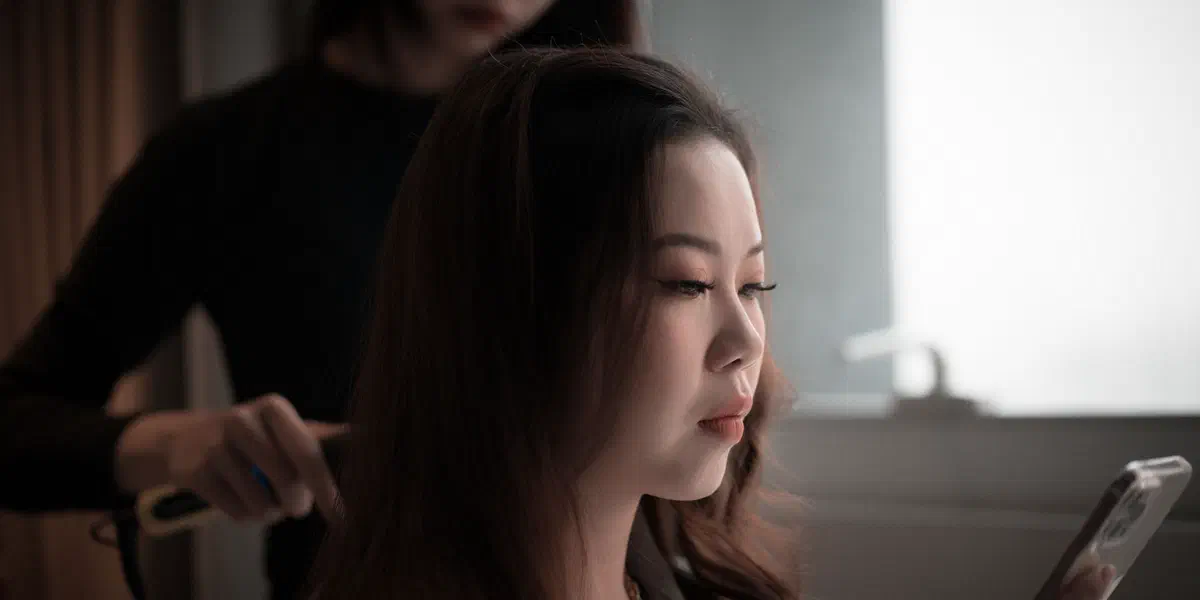
You sit down in a Seoul salon chair with a reference photo on your phone. Getting a perm, a straightening treatment or a new color is a popular way to bring something home from the trip. Chemical hair services are also the appointments most likely to go wrong when the stylist does not know your hair’s history. A cut can be fixed at the next trim. Over-processed hair often has to grow out. This story covers how the main chemical services work, why previously treated hair needs extra caution and what to cover in the consultation.
The services you will see on a menu
Perms, including heated perms
A perm reshapes hair in two chemical stages. A review in Frontiers in Medicine explains that a reducing agent first breaks the disulfide bonds that hold hair proteins together, which lets the hair be wrapped into a new shape. An oxidizing agent then rebuilds those bonds to fix the curl. A review in the International Journal of Trichology adds that thioglycolate-based perm products must be neutralized with a hydrogen peroxide solution afterward.
A heated perm, the type usually sold as a “digital perm,” applies heat during the setting stage. The Frontiers review notes that heat during perming adds moisture loss and breakdown of tryptophan, an amino acid in hair. We could not find a peer-reviewed study that measures damage from digital perms specifically, so it is fair to ask your stylist how they adjust heat and timing for your hair.
Magic straightening
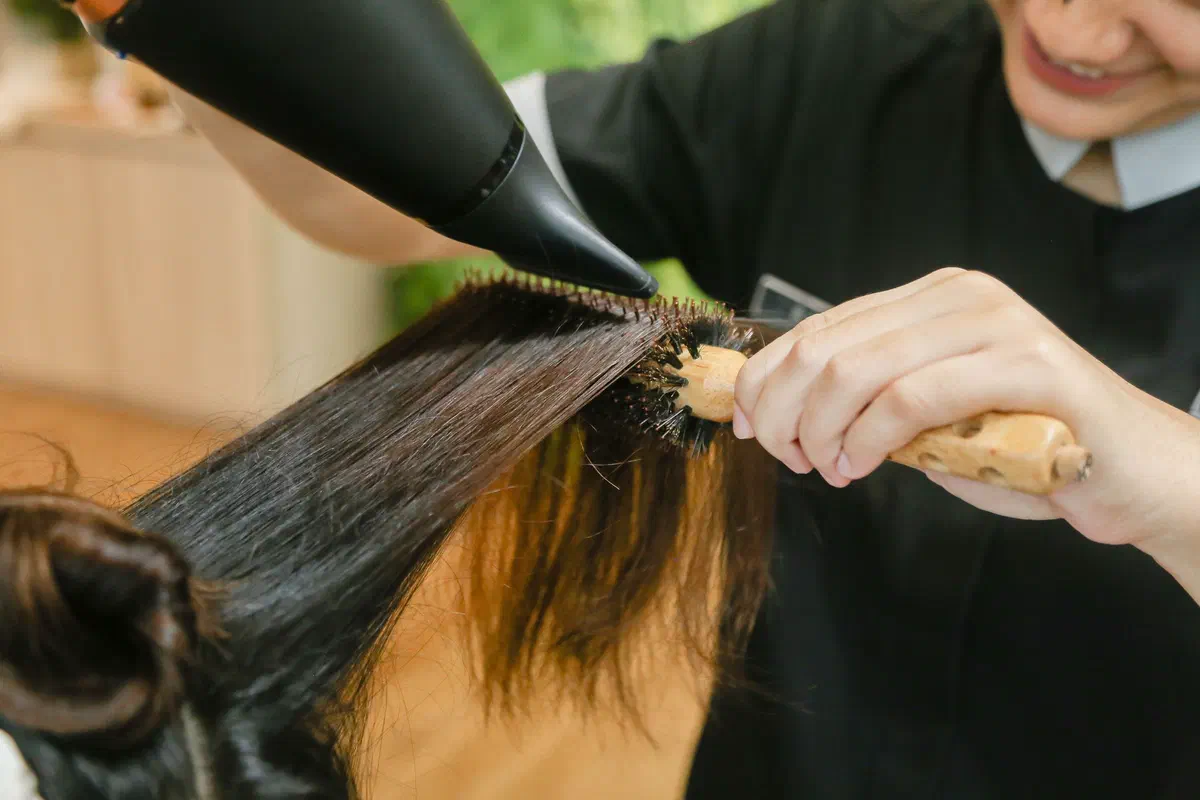
Magic straightening is a flat-iron-based straightening perm for wavy or curly hair. A 2012 Korean study in Applied Microscopy examined hair before and after the treatment and found cuticle damage and protein loss after the warm process, and less damage when hair was cooled quickly afterward. The study used hair from one person, so it shows what can happen rather than how often. The International Journal of Trichology review describes a related process, thermal reconditioning, as thioglycolate chemistry combined with a hot iron.
Smoothing treatments
Some smoothing and keratin-style treatments release formaldehyde when heated. The U.S. Food and Drug Administration says these products may list formaldehyde as formalin or methylene glycol on the label, and that heating releases it into the air as a gas. Reported reactions include eye irritation, headaches, coughing and skin rash. The FDA suggests asking your stylist whether a product contains formaldehyde-related ingredients, and avoiding it if they are unsure.
Color
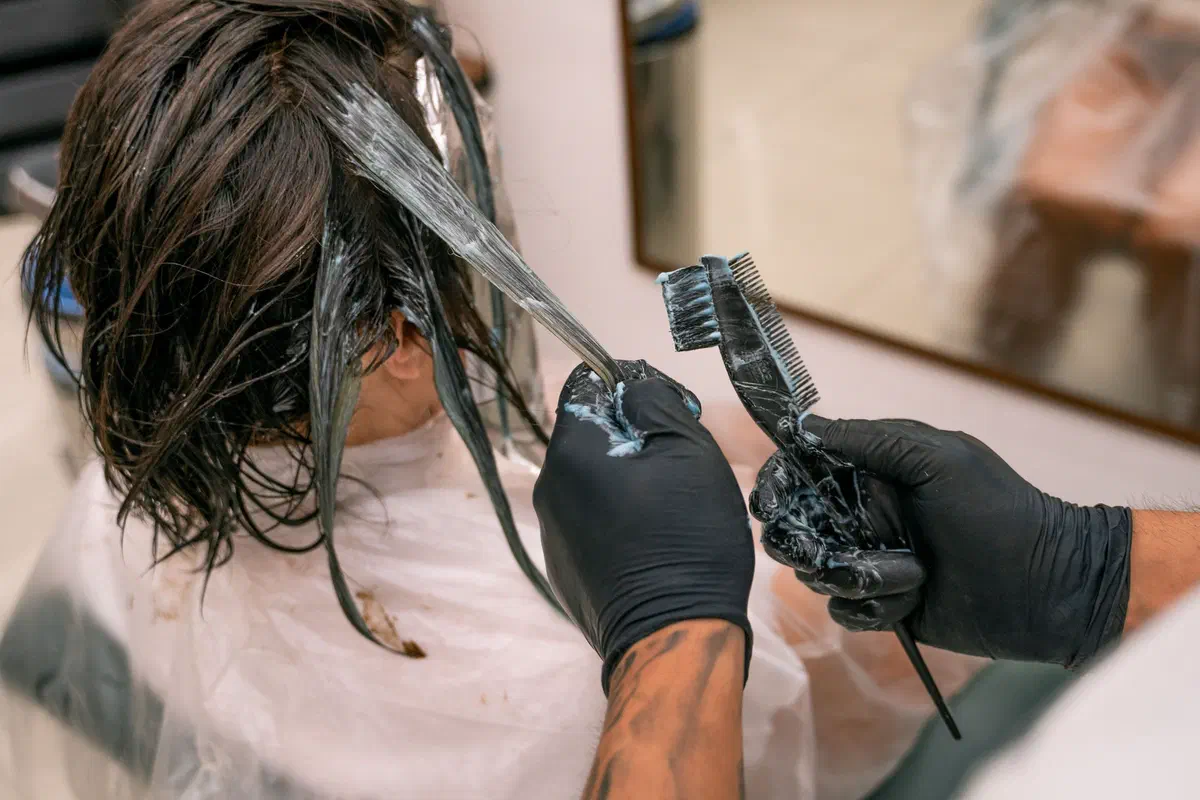
Permanent dyes work by opening the cuticle with ammonia or a similar alkaline agent and developing color inside the hair with hydrogen peroxide, according to the International Journal of Trichology review. The same review explains that demi-permanent colors use less peroxide and no ammonia, do not lighten hair and fade over a number of washes. The Frontiers review notes that dyeing can strip a protective lipid layer from the hair surface, leaving it rougher and duller.
Why processed hair changes the plan
If your hair has been bleached, colored, permed or straightened before, tell the stylist in detail. The reviews give specific reasons:
- Some chemistries do not mix. The International Journal of Trichology review states that hydroxide relaxers and thioglycolate products are incompatible with each other. It also says neither should be used on bleached hair.
- Bleach makes hair absorb more. Bleached hair is more porous, so straighteners and dyes penetrate faster.
- Highlights and straightening can clash. The same review warns that combining light shades or highlights with chemical relaxers can lead to breakage.
- Strand tests help. The review recommends a strand test before treatment to check how the hair responds.
Spacing chemical services
| Situation | What the sources advise |
|---|---|
| You want a perm or straightening and color on the same trip | AAD: have one service at a time; perm or relax first, then color about 2 weeks later |
| Color after straightening | International Journal of Trichology review: wait about 15 days before demi-permanent color |
| Repeat relaxer treatments | Same review: 12 weeks or longer between sessions, applied to new growth only |
| Regular touch-ups of color, perms or relaxers | AAD: space them out, and stretch to 8 to 10 weeks or longer in dry weather |
| Any dye containing PPD | NHS: test at least 48 hours before full use |
For a short trip, the AAD’s two-week gap means choosing one chemical service, or doing the second at home.
Allergy checks for color
The NHS explains that many permanent and some semi-permanent dyes contain PPD (paraphenylenediamine), which can cause allergic reactions. Symptoms can take up to 72 hours to appear and include stinging, burning, itchy rash and blisters. Severe reactions with facial swelling or breathing difficulty need emergency care. The NHS also notes that a past black henna tattoo can raise the risk of reacting to PPD later. The Frontiers review reports positive patch tests to PPD in roughly 4% of people tested in Europe and Asia.
If you plan to color in Seoul, ask for a skin or strand test at least 48 hours ahead. In practice, this means a short first visit early in the trip. If you have reacted before, the NHS suggests considering a non-permanent dye.
How to run the consultation
A language gap makes preparation more important. Before the appointment:
- Bring photos. Show the result you want and, just as useful, results you do not want.
- Write down your hair history for the past two years: bleach, color, perms, straightening, keratin or smoothing treatments, and dates where you know them.
- Ask what product family will be used and whether it is compatible with your previous treatments.
- Ask about formaldehyde if a smoothing or keratin treatment is offered.
- Ask for a strand test on a hidden section if your hair is already processed.
- Confirm the total time. Chemical services can run long, so leave margin before dinner plans or a flight.
- Speak up during processing if your scalp stings or burns. The Frontiers review notes that heat and strong oxidizers can injure the scalp.
Aftercare once you leave
The AAD recommends using conditioner after every shampoo, keeping heat styling to a minimum and protecting hair from sun with a leave-in product containing zinc oxide or a wide-brimmed hat. If you want to restock shampoo and treatment products for chemically treated hair before you fly home, the shopping-day story covers the large beauty stores and the tourist tax refund.
If you develop a scalp rash, blistering or swelling after a service, the NHS advises washing hair and scalp with a mild shampoo, seeing a pharmacist for mild symptoms and seeing a doctor if symptoms worsen or persist.
Sources
- Hair Cosmetics: An OverviewInternational Journal of Trichology, via PubMed Central
- Mechanisms of impairment in hair and scalp induced by hair dyeing and perming and potential interventionsFrontiers in Medicine, via PubMed Central
- A Study of Hair Damage by Magic Straight PermApplied Microscopy, via KoreaScience
- 10 hair care habits that can damage your hairAmerican Academy of Dermatology
- Hair dye reactionsNHS
- Hair Smoothing Products That Release Formaldehyde When HeatedU.S. Food and Drug Administration
This story is general travel information, checked by the editors against the sources above. It is not medical advice. How we research stories.
Read next
Salon / Stage 1: before the trip
One Trip, Two Chairs: Planning a Clinic Visit and a Salon Appointment in Seoul

Clinic / Stage 2: arrival and consultation
Agencies, Estimates and Your Rights: Korea's Rules for International Patients
Surgery / Stage 2: arrival and consultation