Skincare / Stage 5: going home
Flying Home With K-Beauty Products: Liquid Limits, the Customs Stamp and Declaring Your Haul
Departure day, with a suitcase of serums and sunscreens. The liquid limits at Incheon, the order of the customs stamp and bag drop, and what your home country may ask you to declare.
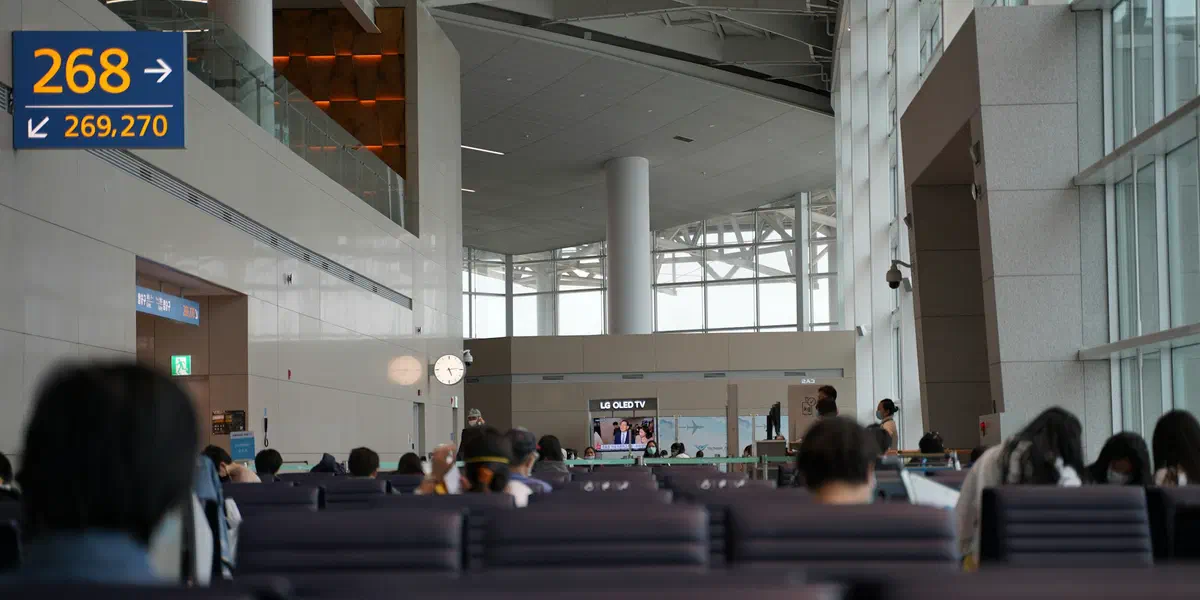
It is your last morning in Seoul. The suitcase is open on the hotel bed, and somewhere between the clothes are toners, serums, sheet masks, a few sunscreens and a hair treatment from the salon. Most of it is liquid, gel or cream, which means airport rules apply to it, and some of it may carry a tax refund that has to be claimed before you check your bag.
This story goes through departure day in order: packing the cabin bag, packing the checked bag, the tax refund steps at the airport, and arriving home. It uses Incheon International Airport’s own guidance; other airports and airlines can differ, and the airport itself advises confirming details with your airline.
Packing the cabin bag
Incheon Airport’s restricted items page sets out the rule for international departures. Liquids, gels, sprays and medicines, including gel cosmetics and toiletries such as toothpaste and shampoo, must be in containers of 100 ml or less. All of them must fit in a single transparent, sealed bag of up to 1 litre, one bag per person.
The United States uses the same limit for flights through its checkpoints. The Transportation Security Administration (TSA) calls it the 3-1-1 rule: containers of 3.4 ounces (100 ml) or less, all in one quart-size bag per traveller, with lotion, shampoo and conditioner among its examples.
For a K-beauty haul, that usually means:
- Travel sizes and minis go in the cabin bag, in the one clear bag, if you want them on the plane.
- Full-size bottles and tubes over 100 ml go in the checked bag. The TSA says the same: pack containers larger than 100 ml in checked baggage.
- Keep the moisturizer you need for the flight in the clear bag. Cabin air is very dry on long flights, as the days-after aftercare story explains.
Duty-free liquids
Incheon allows duty-free liquids in the cabin regardless of volume only if they are packed in a sealed duty-free liquid item bag, which must stay sealed until you board the flight to your final destination. If you connect through the United States, the TSA adds its own conditions for duty-free liquids over 100 ml: a transparent, tamper-evident bag, the original receipt and a purchase within 48 hours. Even then, the TSA recommends putting them in checked baggage.
Packing the checked bag
Incheon’s page lists a separate limit for non-flammable sprays in checked baggage: up to 500 g (500 ml) per item and 2 kg (2 litres) in total, under aviation rules for hazardous materials. If your haul includes spray sunscreens, setting sprays or hair sprays, count them before you close the suitcase. The page does not give a checked-baggage limit for other liquid cosmetics.
Wrapping each bottle in a sealed plastic bag and packing liquids in the middle of the case, surrounded by clothes, keeps a leak from reaching everything else.
The tax refund on departure day
If you bought goods under the tourist tax refund and did not take the refund at the till, the airport is where you claim it. The shopping-day story covers the eligibility rules; the departure steps are what matter here, and their order affects how you pack.
VISITKOREA, the Korea Tourism Organization’s official guide, describes the steps at Incheon:
- Check in, but do not check your bag yet. Keep the refund receipts ready.
- Show the goods and receipts to a customs officer to receive the customs export approval stamp.
- Check your bag at the oversized baggage counter.
- Claim the refund at a refund counter or kiosk with your passport and receipts. Cash refunds are also available after security.
Because the officer may want to see the goods, pack the refund purchases unopened and near the top of the suitcase, with the receipts in one envelope. If the refund counter is closed, VISITKOREA says you can write your details on the receipt and drop it in the designated box; the refund then goes to an international credit card, Alipay or WeChat Pay within one to two months. You must leave Korea within three months of the purchase date for the refund to apply.
Leave extra time at the airport for these steps, especially if you are also carrying medical records or a treatment summary from a clinic visit.
Arriving home
What happens at your home airport depends on your country’s customs rules, so check them before you fly. As one example, U.S. Customs and Border Protection says that returning U.S. residents must declare anything they bring back that they did not have when they left, and sets an 800 dollar duty-free personal exemption that can be used once every 31 days, with joint declarations possible for families travelling together.
Keep the store receipts with your passport until you are through customs at home. They show what you paid if an officer asks, and they are the same papers you needed for the refund in Seoul.
Sources
- Restricted ItemsIncheon International Airport Corporation
- Duty Free & Tax RefundsVISITKOREA (Korea Tourism Organization)
- Liquids, Aerosols, and Gels RuleU.S. Transportation Security Administration
- Customs Duty InformationU.S. Customs and Border Protection
This story is general travel information, checked by the editors against the sources above. It is not medical advice. How we research stories.